10 Common Applications of a Veterinary Endoscope in Modern Veterinary Practice
- Share
- Issue Time
- Jun 26,2026
Summary
As minimally invasive medicine continues to reshape animal healthcare, theveterinary endoscope has become an indispensable diagnostic and therapeutic tool in modern veterinary clinics.
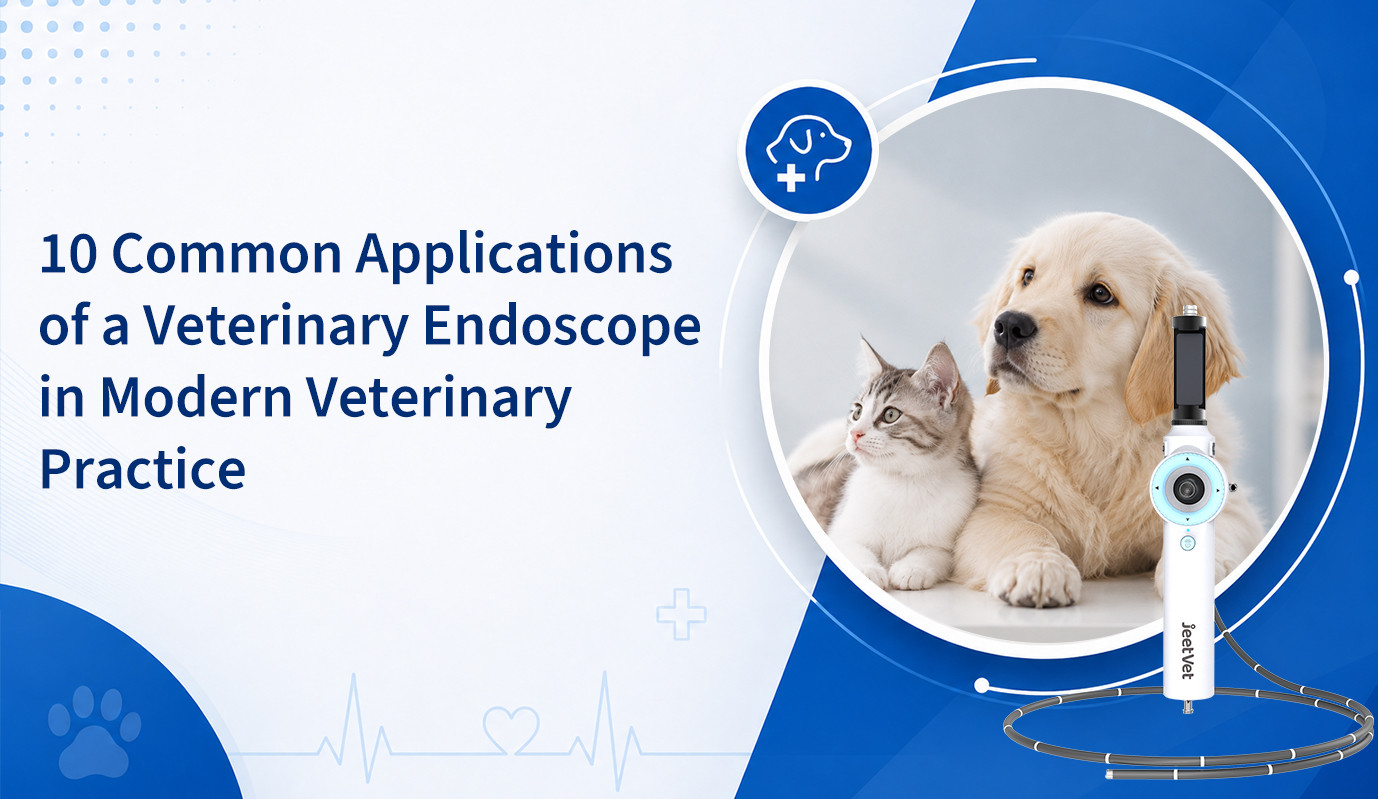
As minimally invasive medicine continues to reshape animal healthcare, the veterinary endoscope has become an indispensable diagnostic and therapeutic tool in modern veterinary clinics.
A veterinary endoscope enables veterinarians to directly visualize internal organs, obtain biopsy samples, and perform therapeutic procedures with minimal patient trauma.
Today, veterinary endoscopy is widely used in companion animal medicine, helping clinics improve diagnostic accuracy, reduce recovery times, and expand clinical services.
In this article, we explore ten of the most common applications of a veterinary endoscope in everyday veterinary practice.
1. Foreign Body Removal
Foreign body ingestion is one of the most frequent emergencies encountered in small animal practice.
Using a veterinary endoscope, veterinarians can safely remove objects such as:
- Fishhooks
- Bones
- Sewing needles
- Toys
- Fabric and string
- Plastic objects
In many cases, endoscopic retrieval eliminates the need for invasive surgery.
2. Gastrointestinal Examination
Veterinary endoscopes are commonly used to investigate gastrointestinal disorders, including:
- Chronic vomiting
- Diarrhea
- Weight loss
- Loss of appetite
- Gastric ulcers
- Inflammatory bowel disease
Direct visualization allows veterinarians to accurately assess mucosal health and identify lesions.
3. Respiratory Endoscopy
Respiratory disorders often require direct examination of the airways.
A veterinary endoscope can be used to inspect:
- Nasal passages
- Larynx
- Trachea
- Bronchi
Respiratory endoscopy is particularly valuable for chronic coughing, sneezing, and airway abnormalities.
4. Rhinoscopy
Rhinoscopy involves examination of the nasal cavity using a veterinary endoscope.
Common indications include:
- Chronic sneezing
- Nasal discharge
- Nosebleeds
- Nasal foreign bodies
- Suspected tumors
5. Tracheoscopy and Bronchoscopy
Tracheoscopy and bronchoscopy allow veterinarians to evaluate the lower respiratory tract in animals with persistent respiratory symptoms.
- Chronic cough
- Airway collapse
- Bronchitis
- Foreign bodies
- Airway inflammation
6. Biopsy Procedures
Modern veterinary endoscopes equipped with a working channel allow precise biopsy collection.
Biopsy procedures are commonly performed to diagnose:
- Inflammatory disease
- Gastrointestinal disorders
- Tumors
- Respiratory lesions
7. Urinary Tract Examination
Cystoscopy performed with a veterinary endoscope helps evaluate:
- Hematuria
- Bladder stones
- Urinary tract abnormalities
- Chronic cystitis
- Bladder masses
8. Lung Lavage Procedures
Bronchoalveolar lavage (BAL) is frequently performed using a veterinary endoscope to collect samples from the lower respiratory tract.
BAL is commonly used for diagnosing:
- Chronic respiratory disease
- Pneumonia
- Inflammatory airway disorders
- Infectious disease
9. Minimally Invasive Treatment Procedures
In addition to diagnostics, veterinary endoscopes can also assist in treatment procedures, including:
- Foreign body extraction
- Feeding tube placement
- Targeted medication delivery
- Polyp removal
10. Early Disease Detection
One of the greatest advantages of veterinary endoscopy is early disease detection.
Direct visualization allows veterinarians to identify subtle abnormalities before they progress into more serious conditions.
Early diagnosis often leads to:
- Improved treatment outcomes
- Reduced patient trauma
- Lower treatment costs
- Better long-term prognosis
Why Modern Clinics Are Investing in Veterinary Endoscopes
As pet owners increasingly seek advanced and minimally invasive treatment options, veterinary clinics are investing in portable veterinary endoscope systems to improve diagnostic capabilities and expand clinical services.
- Higher diagnostic accuracy
- Expanded service offerings
- Improved patient care
- Additional revenue opportunities
- Reduced referral dependence
How JeetVet Veterinary Endoscopes Support Clinical Practice
JeetVet portable veterinary endoscope systems are designed to support a wide range of diagnostic and therapeutic applications in companion animal medicine.
Key features include:
- HD imaging technology
- 360° rotation control
- Integrated water and air supply systems
- Working channel compatibility
- Portable operation
- Multi-device connectivity
These features help veterinary professionals perform advanced minimally invasive procedures while improving clinical efficiency and patient outcomes.
Conclusion
The veterinary endoscope has become one of the most versatile tools in modern veterinary medicine.
From foreign body removal and respiratory diagnostics to biopsy procedures and minimally invasive treatments, veterinary endoscopy continues to transform companion animal healthcare.
As technology advances, portable veterinary endoscope systems are helping clinics provide safer, faster, and more effective care for their patients.