Abdominal Endoscopy in Veterinary Medicine: Enhancing Diagnosis and Surgery
- Share
- Issue Time
- Jan 9,2026
Summary
Abdominal disorders in small animals, including chronic abdominal pain, ascites, suspected tumors, and gastrointestinal obstruction, often require accurate evaluation for effective treatment.
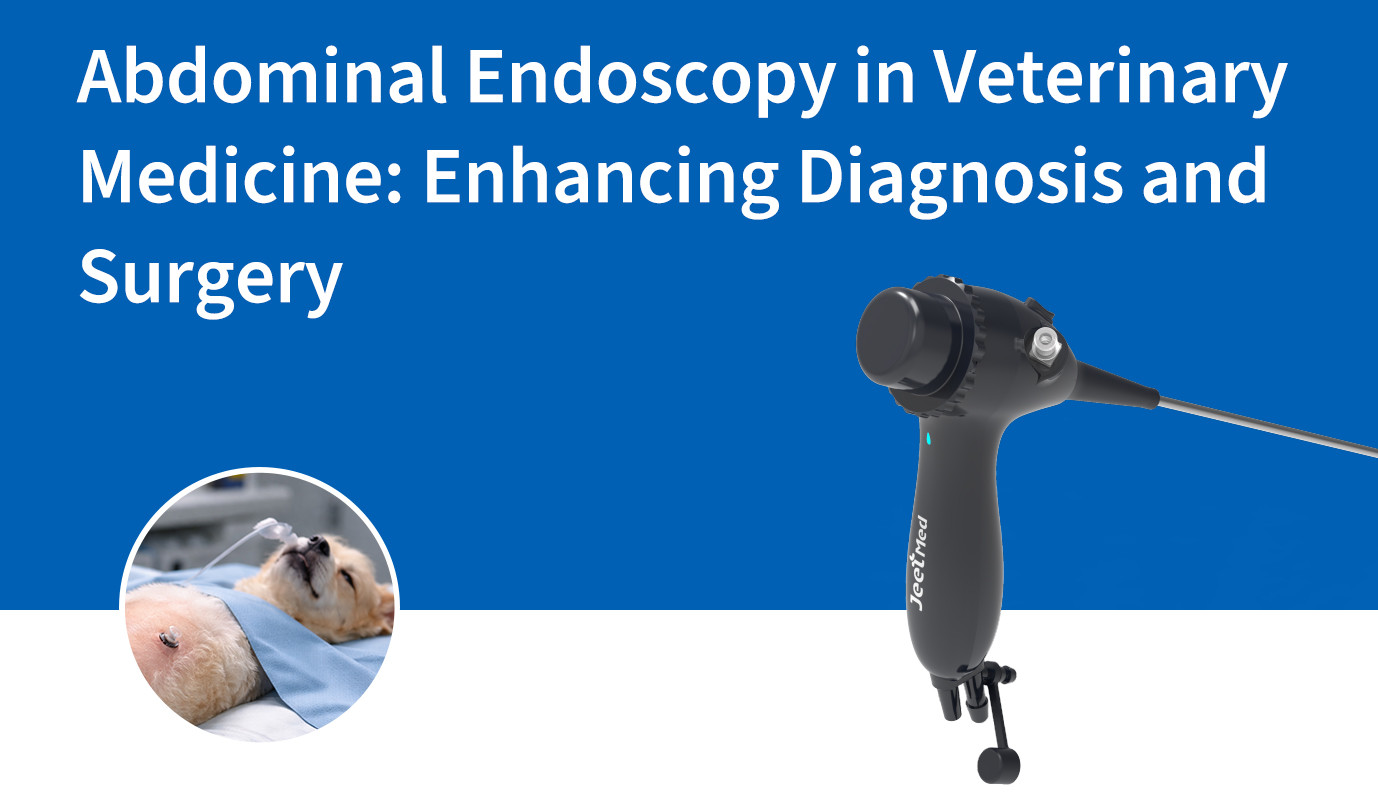
Abdominal disorders in small animals, including chronic abdominal pain, ascites, suspected tumors, and gastrointestinal obstruction, often require accurate evaluation for effective treatment. Abdominal Endoscopy, also known as Veterinary Laparoscopy, performed with a Veterinary Endoscope, allows veterinarians to visualize abdominal organs directly through a minimally invasive approach.
What Is Abdominal Endoscopy?
Abdominal endoscopy involves inserting a slim, flexible, or rigid Veterinary Endoscope into the abdominal cavity through a small incision. This technique enables direct inspection of internal organs while significantly reducing surgical trauma compared to traditional exploratory surgery.
Common Applications of Veterinary Laparoscopy
- ▪️Visualization of the liver, spleen, intestines, and reproductive organs
- ▪️Laparoscopic-guided biopsy of abdominal organs
- ▪️Evaluation of abdominal masses or adhesions
- ▪️Foreign body detection and retrieval
- ▪️Minimally invasive diagnostic exploration
When Is Abdominal Endoscopy Indicated?
- ▪️Chronic abdominal pain of unknown origin
- ▪️Ascites or unexplained abdominal fluid accumulation
- ▪️Suspected abdominal tumors or organ enlargement
- ▪️Foreign body assessment
- ▪️Liver or spleen biopsy for definitive diagnosis
Advantages of Using a Veterinary Endoscope for Abdominal Procedures
- ▪️High-definition visualization of abdominal organs
- ▪️Smaller incisions with reduced tissue trauma
- ▪️Accurate biopsy under direct endoscopic guidance
- ▪️Reduced postoperative pain and faster recovery
- ▪️Improved diagnostic confidence for complex cases
Best Practices for Veterinary Laparoscopy
To ensure optimal outcomes when performing abdominal endoscopy, veterinarians should follow established best practices:
- ▪️Appropriate patient preparation and general anesthesia
- ▪️Selection of suitable endoscope length and diameter
- ▪️Controlled insufflation for clear visualization
- ▪️Gentle tissue handling to minimize trauma
- ▪️Comprehensive documentation of endoscopic findings
Conclusion
Abdominal Endoscopy is an essential technique in modern veterinary medicine, offering a minimally invasive and highly effective method for diagnosing abdominal disorders. With the support of a reliable Veterinary Endoscope, veterinarians can enhance diagnostic accuracy, reduce surgical risk, and improve outcomes for small animal patients.