Canine Endoscopy: Modern Diagnostic Solutions for Dog Healthcare
- Share
- Issue Time
- Dec 3,2025
Summary
Canine Endoscopy is a minimally invasive diagnostic approach that gives veterinarians direct visualization of internal organs without open surgery.
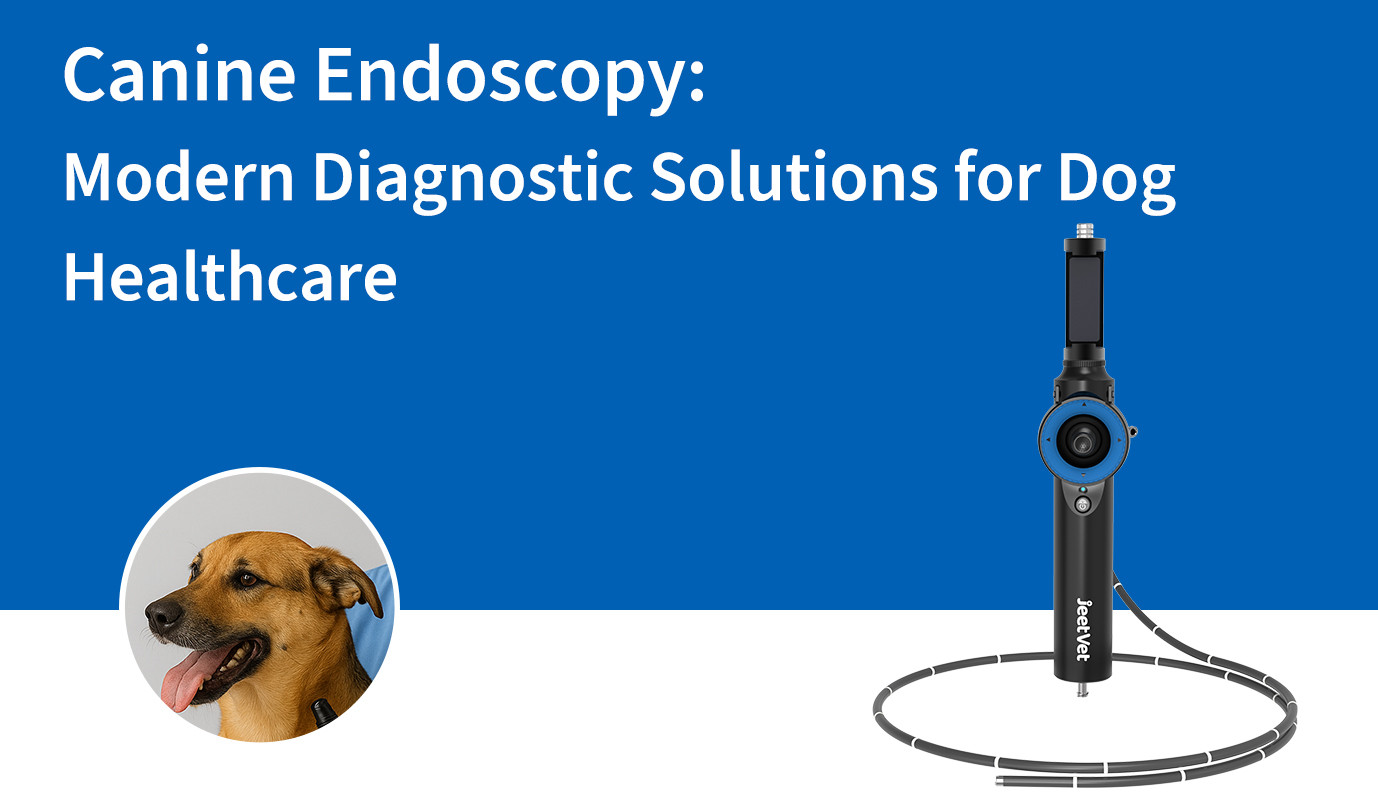
Canine Endoscopy is a minimally invasive diagnostic approach that gives veterinarians direct visualization of internal organs without open surgery. With a high-quality Veterinary Endoscope, clinics can perform gastroscopy, bronchoscopy, colonoscopy, cystoscopy and more — improving diagnostic accuracy while reducing recovery time for dogs.
What Is Canine Endoscopy and When to Use It
Endoscopy uses a thin, flexible camera (a Veterinary Endoscope) inserted through natural openings to inspect internal structures. It’s one of the most useful tools in Small Animal Endoscopy for both routine and emergency cases.
Common Indications
- ▪️Chronic vomiting, suspected gastritis or ulcers — Gastroscopy
- ▪️Persistent cough, nasal discharge, or suspected airway obstruction — bronchoscopy / rhinoscopy
- ▪️Chronic diarrhea, hematochezia or large-bowel disease — colonoscopy
- ▪️Recurrent urinary signs or hematuria — cystoscopy / urethroscopy
- ▪️Foreign body retrieval from GI or airway
- ▪️Targeted biopsy sampling to confirm inflammation, infection, or neoplasia
Key Procedures Explained
Gastroscopy (Upper GI Endoscopy)
Gastroscopy is among the most frequently performed canine endoscopic procedures. It inspects the esophagus, stomach and proximal duodenum to identify ulcers, erosions, tumors, or foreign material, and enables guided biopsies via the scope’s working channel.
Bronchoscopy & Rhinoscopy
For chronic cough, unexplained respiratory signs or suspected inhaled foreign bodies, bronchoscopy and rhinoscopy provide direct visualization of the larynx, trachea, bronchi and nasal cavities — critical for precise diagnosis and directed therapy.
Colonoscopy & Lower GI Endoscopy
Colonoscopy helps evaluate colitis, polyps, tumors and other lower GI disorders. It is the preferred method to obtain mucosal biopsies with minimal invasiveness.
Urogenital Endoscopy
Cystoscopy and vaginoscopy assess bladder and lower urinary tract disease (stones, tumors, persistent infections) and can facilitate stone or mass retrieval in selected cases.
Why Portable Veterinary Endoscopes Are Increasingly Preferred
Modern clinics value speed, flexibility and cost-effectiveness. Portable Veterinary Endoscope systems meet these needs by offering:
- ▪️Fast setup for emergency foreign-body or GI obstruction cases
- ▪️Mobility between exam rooms or use in mobile clinics
- ▪️Compatibility with laptops, tablets and monitors (USB / WiFi)
- ▪️High-resolution imaging with working channels for biopsy and retrieval
- ▪️Lower footprint and maintenance cost compared with fixed towers
Practical Considerations & Best Practices
Anesthesia & Patient Safety
Because endoscopy often requires sedation or general anesthesia, follow standard protocols for pre-op assessment, temperature control, and oxygenation. Minimize procedure time and monitor carefully for hypoxia or aspiration risk.
Scope Selection & Handling
Choose scope diameter, insertion length and working channel size to match patient size and intended procedure. Maintain sterile handling, test irrigation/suction before starting, and avoid over-distension of hollow organs.
JeetVet Solutions for Canine Endoscopy
JeetVet offers portable, high-resolution endoscopy systems designed for veterinary clinics. Key features beneficial for canine practice include:
- ▪️Multiple probe sizes for small to large dogs
- ▪️Working channels for biopsy, suction and foreign body retrieval
- ▪️HD imaging and steady illumination for clearer diagnosis
- ▪️USB/WiFi connectivity and rugged construction for clinical use
Explore product options:
JeetVet Portable Veterinary Endoscopes
Company info: About JeetVet
Conclusion
Canine Endoscopy is a cornerstone of modern veterinary diagnostics. By enabling Gastroscopy, bronchoscopy, colonoscopy and urogenital endoscopy with minimal invasiveness, a well-chosen Veterinary Endoscope improves diagnostic yield, reduces surgical interventions and shortens recovery times for dogs. Portable endoscope systems make advanced diagnostics more accessible to a wider range of clinics — improving care and client satisfaction.