Chronic Vomiting in Cats: A Hidden Esophageal Problem Revealed by Endoscopy
- Share
- Issue Time
- May 6,2026
Summary
Chronic vomiting in cats is a common yet complex clinical problem. In many cases, routine diagnostic methods fail to identify the underlying cause.
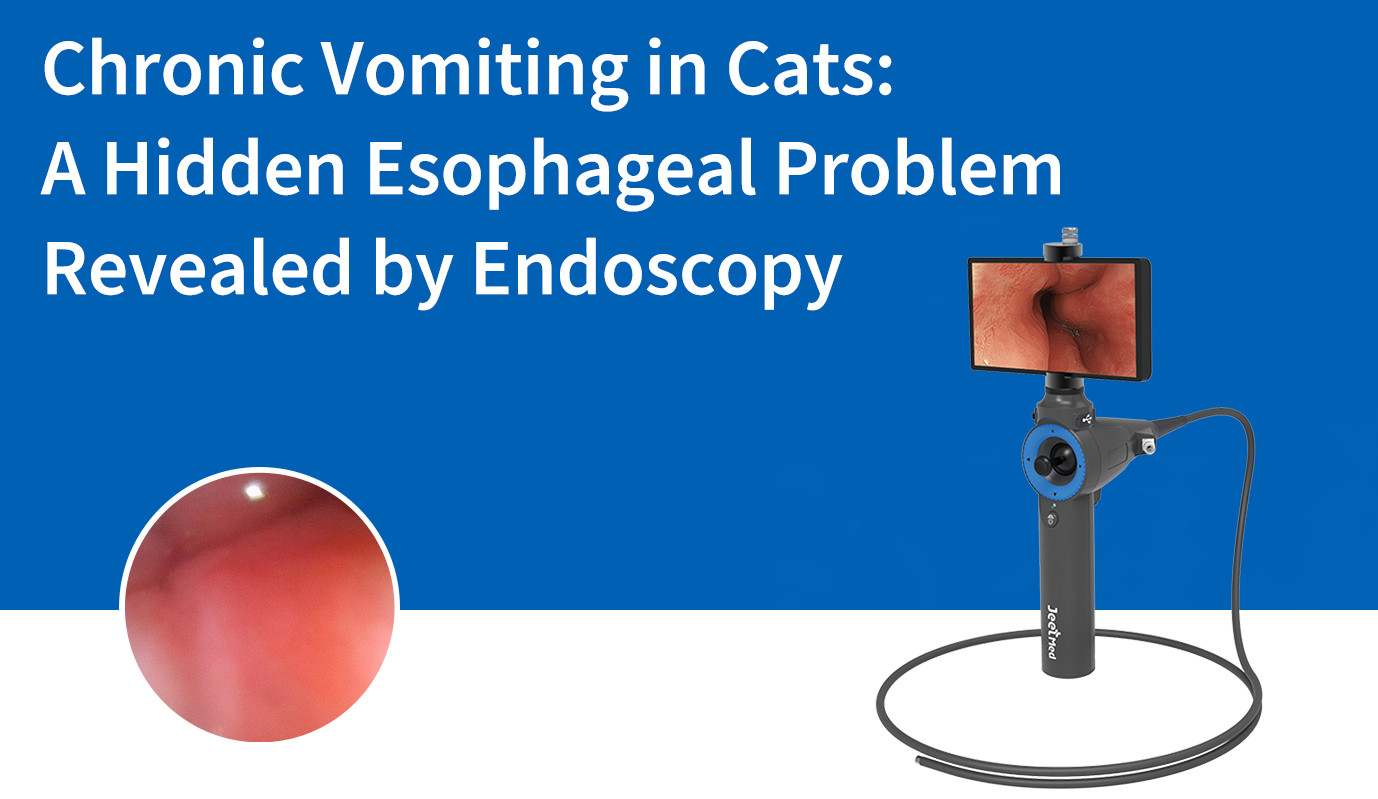
Chronic vomiting in cats is a common yet complex clinical problem. In many cases, routine diagnostic methods fail to identify the underlying cause. This case demonstrates how a portable veterinary endoscope enabled the diagnosis of cardia stenosis and esophagitis, revealing a hidden cause behind persistent vomiting.
Case Background
- Species: Cat
- Gender: Male
- Chief Complaint: Chronic vomiting
The patient had a history of long-term vomiting. Multiple routine examinations, including standard diagnostics, showed no obvious abnormalities. Despite ongoing treatment attempts, the condition persisted without improvement.
Clinical Challenge
Chronic vomiting in cats may be associated with various conditions, including:
- Gastritis
- Foreign body ingestion
- Functional gastrointestinal disorders
- Esophageal diseases
However, traditional diagnostic tools have limitations:
- X-ray cannot clearly visualize mucosal lesions
- Ultrasound has limited ability to assess the esophagus
- Empirical treatment may delay accurate diagnosis
A more precise diagnostic method was required to identify the root cause.
Endoscopic Examination
A gastrointestinal endoscopy was performed using a portable veterinary endoscope system.
- Endoscope inserted through the esophagus
- Gradual advancement into the stomach
- Continuous air insufflation for clear visualization
- Comprehensive inspection of esophagus and gastric entrance
Key Findings
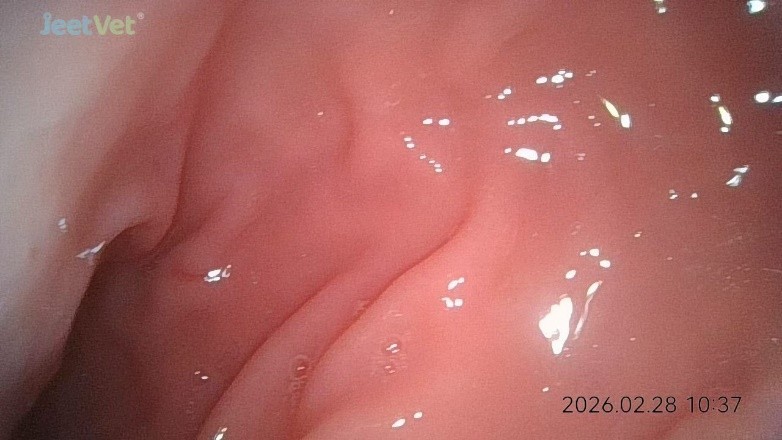
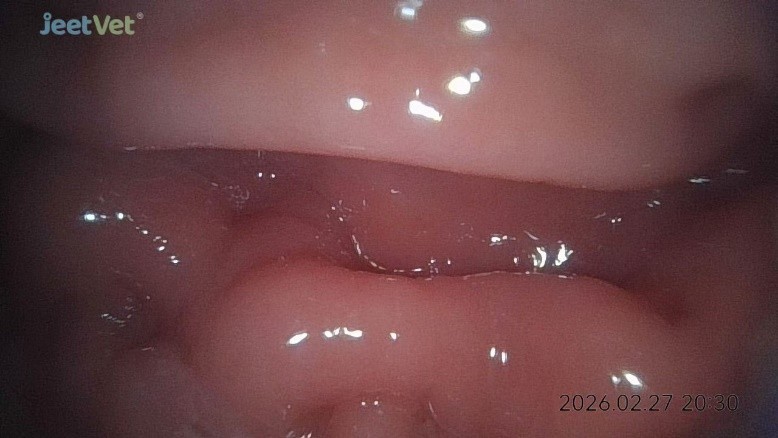
- Cardia stenosis (narrowing at the gastroesophageal junction)
- Esophagitis (inflammation of the esophageal mucosa)
These findings provided a clear explanation for the chronic vomiting that could not be identified through conventional diagnostic methods.
Treatment & Outcome
- Medical management targeting esophagitis
- Dietary adjustments
- Regular follow-up and monitoring
Outcome:
- Significant reduction in vomiting frequency
- Improved appetite and feeding behavior
- Gradual recovery of overall health
Why Endoscopy Was Critical
- Direct Visualization: Identifies lesions not visible on imaging
- Accurate Diagnosis: Differentiates structural from functional disorders
- Targeted Treatment: Enables precise clinical decision-making
Endoscope System Comparison
| Parameter | Portable Veterinary Endoscope | Traditional Endoscope |
|---|---|---|
| Outer Diameter | 5.8 mm | 6–10 mm |
| Instrument Channel | 2.0 mm | 2.0–2.4 mm |
| Working Length | 1000 mm | 1000 mm |
| Image Quality | 720P | 720P |
| Field of View | 120° | 120° |
| Articulation | 360° rotation | 4-direction control |
| Connectivity | Supports phone & computer | Dedicated processor required |
| Learning Curve | Easy to use (~5 minutes) | Requires extensive training |
| ROI | Fast return on investment | Typically 2–3 years |
Clinical Value
This case highlights the importance of endoscopy in diagnosing complex gastrointestinal conditions:
- Identifies hidden esophageal abnormalities
- Improves diagnostic accuracy in chronic cases
- Enhances treatment outcomes
Conclusion
When routine diagnostics fail to determine the cause of chronic vomiting, veterinary endoscopy becomes an essential diagnostic tool.
By enabling direct visualization of the esophagus and stomach, it allows veterinarians to identify conditions such as cardia stenosis and esophagitis, leading to more effective treatment.