Dog Swallowed a Fishing Hook with Sausage — Minimally Invasive Removal Using Veterinary Endoscopy
- Share
- Issue Time
- May 15,2026
Summary
Foreign body ingestion is one of the most common emergency conditions in dogs. Among them, fishhooks are especially dangerous because of their sharp barbed structure, which can easily injure the esophagus or stomach.
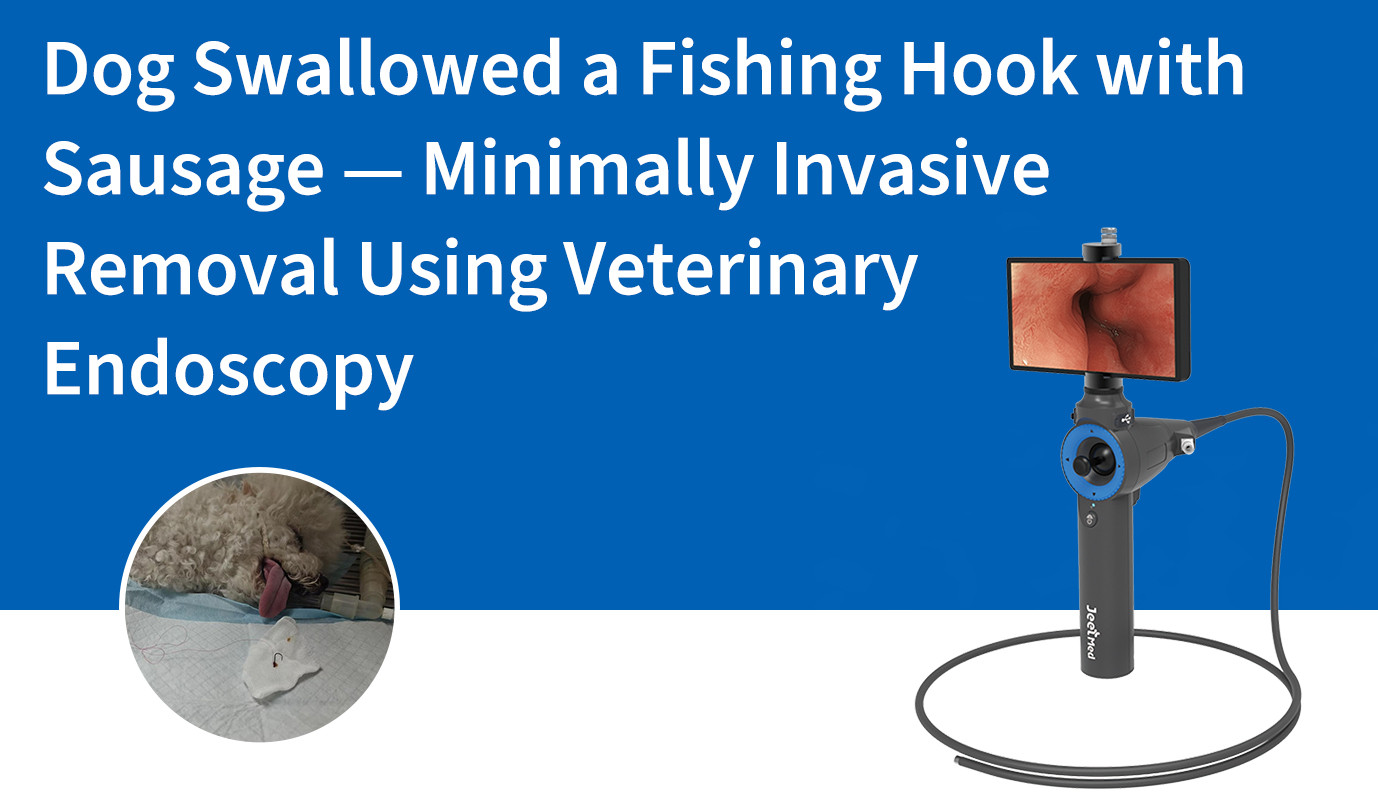
Foreign body ingestion is one of the most common emergency conditions in dogs. Among them, fishhooks are especially dangerous because of their sharp barbed structure, which can easily injure the esophagus or stomach.
This case demonstrates how a portable veterinary endoscope enabled the safe and minimally invasive removal of a swallowed fishhook from a dog’s stomach, avoiding open surgery and allowing rapid recovery.
Case Background
- Species: Dog
- Gender: Female
Chief Complaint
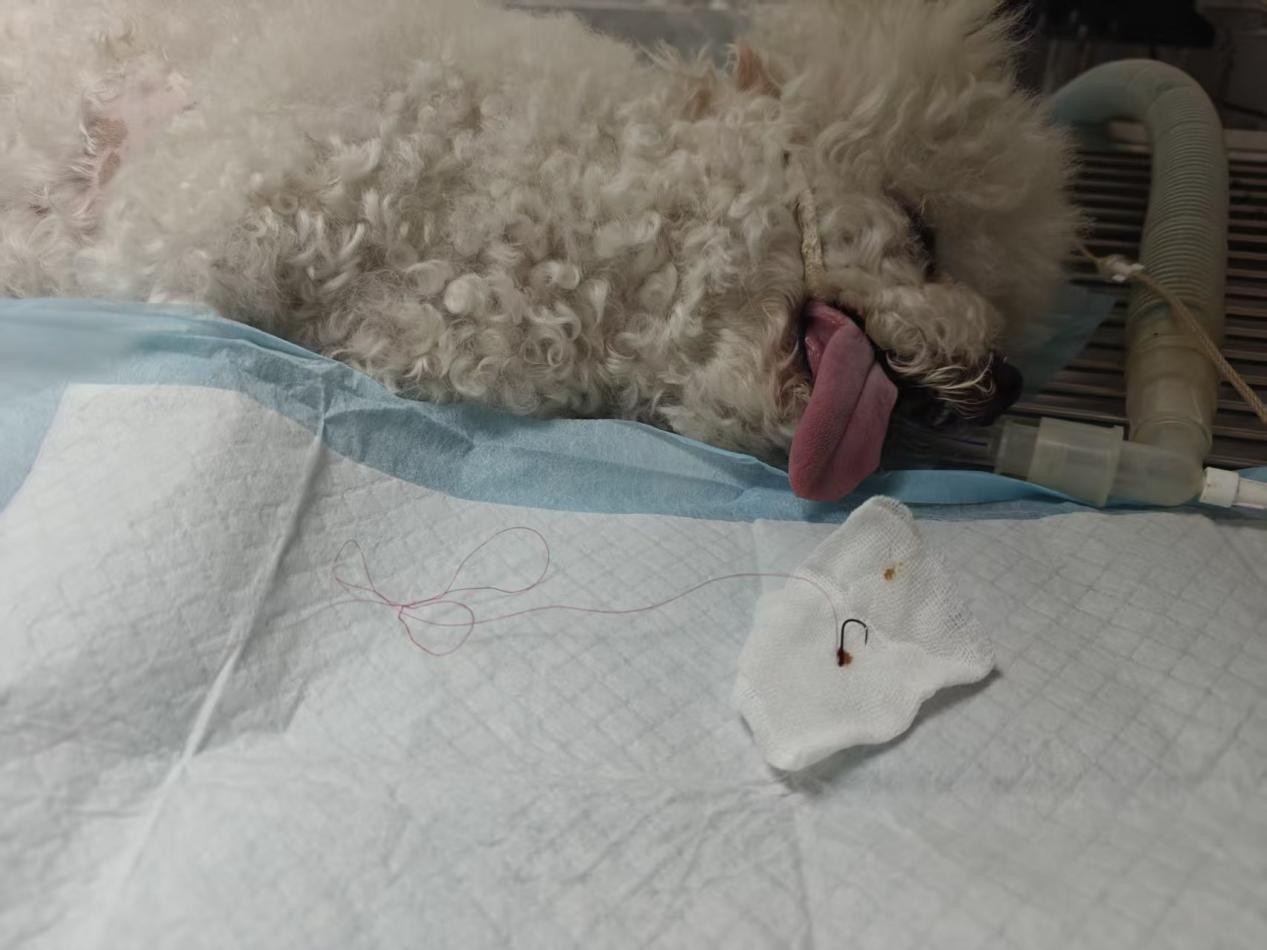
The owner’s child was fishing outdoors, and the dog followed along. Unfortunately, the dog accidentally swallowed a fishhook baited with sausage.
Because fishhooks are sharp and barbed, there was significant risk of:
- ▪️Esophageal injury
- ▪️Gastric perforation
- ▪️Internal bleeding
- ▪️Emergency surgical complications
▪️Immediate intervention was required.
Clinical Challenge
Fishhooks are particularly difficult foreign bodies because:
- ▪️The hook may embed into the stomach lining
- ▪️Blind pulling can cause perforation
- ▪️Traditional surgery is invasive and stressful
▪️Accurate visualization and controlled extraction are essential for safe removal.
Endoscopic Foreign Body Removal Procedure
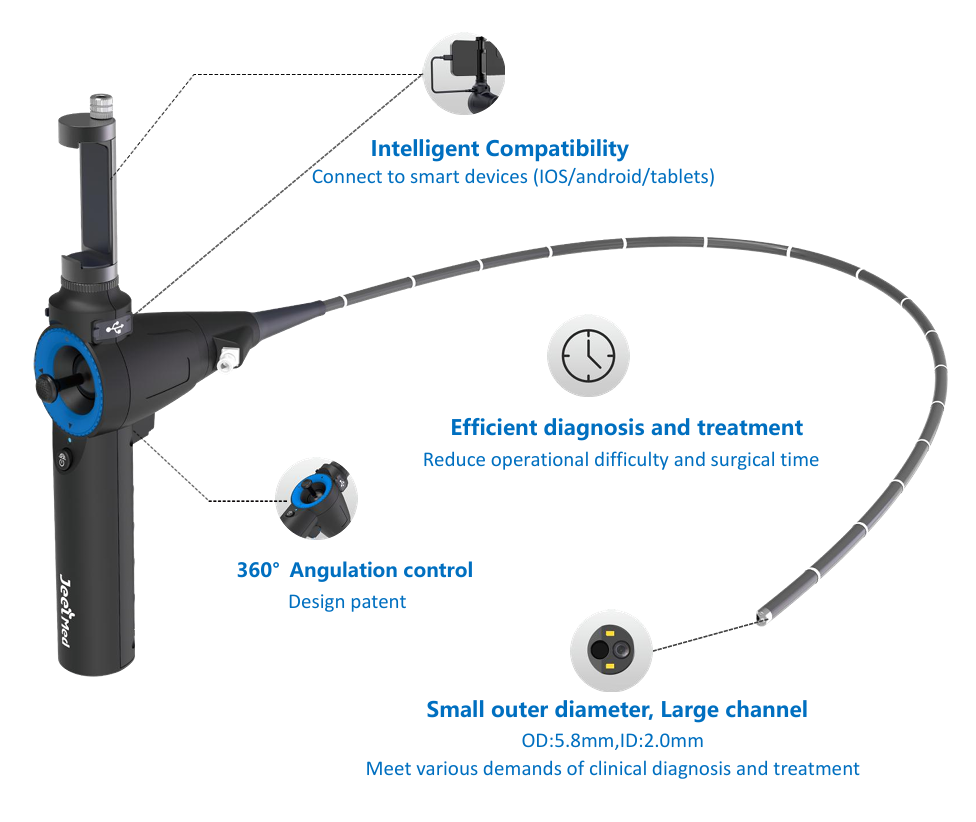
The veterinary team performed gastrointestinal endoscopy using the JeetVet RAE-105 portable veterinary endoscope.
- Endoscope inserted through the esophagus
- Continuous air insufflation for clear visualization
- Examination of the esophagus and stomach
- Identification of the fishhook inside the stomach
- Careful endoscopic extraction through the oral cavity
Endoscopic Examination Findings
Figure 1: Cardia
The endoscope passed smoothly through the gastroesophageal junction.
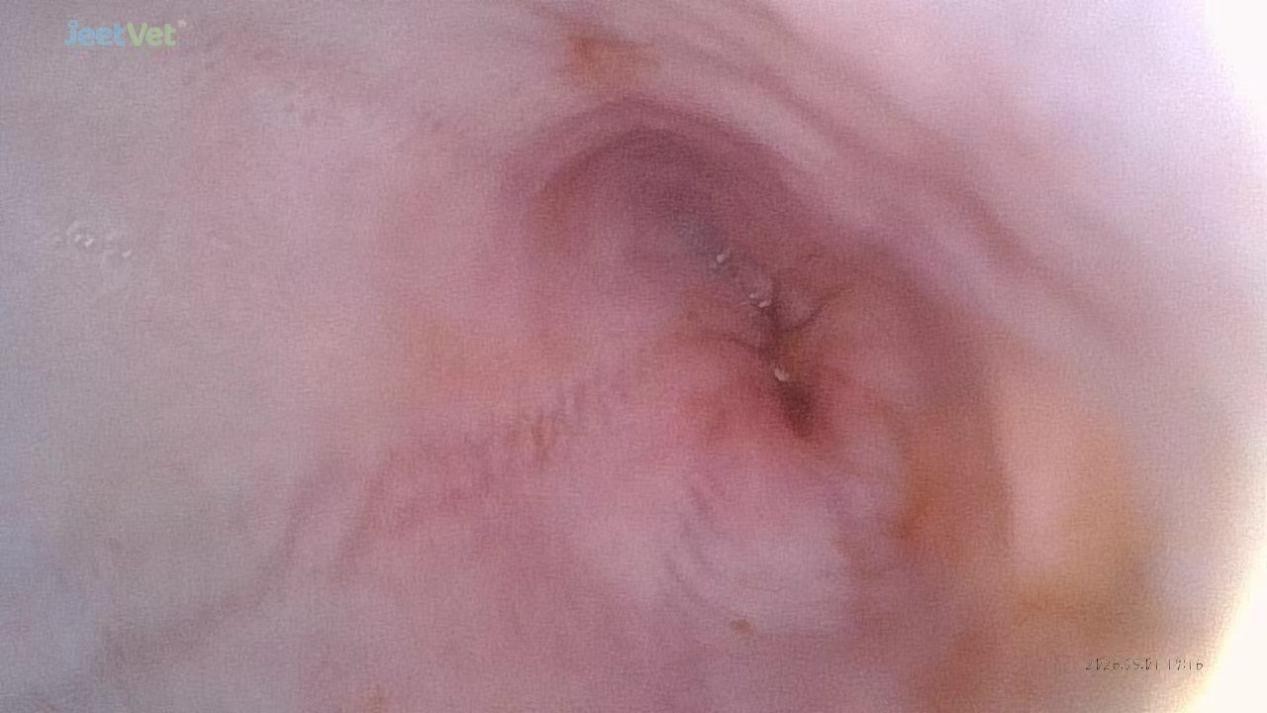
Figure 2: Pylorus
Examination of the pyloric region confirmed no additional obstruction.
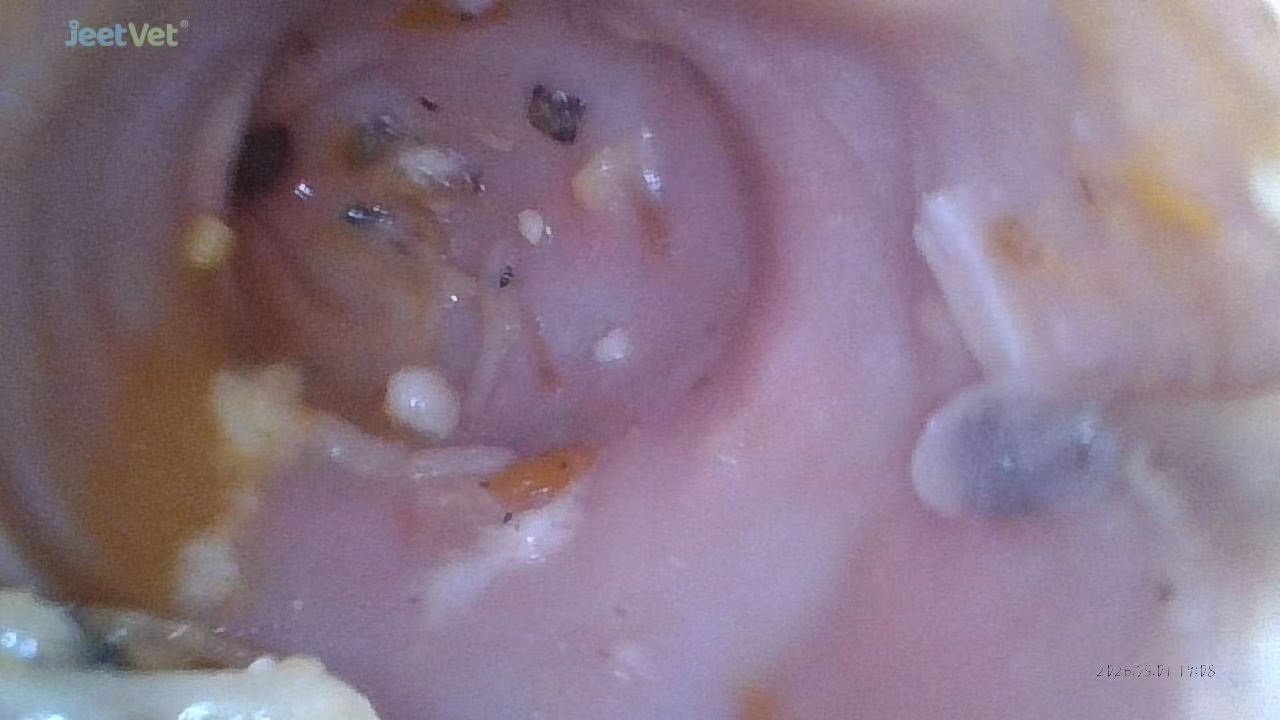
Figure 3: Gastric Fundus — Fishhook Identified
The fishhook was clearly visualized in the gastric fundus.
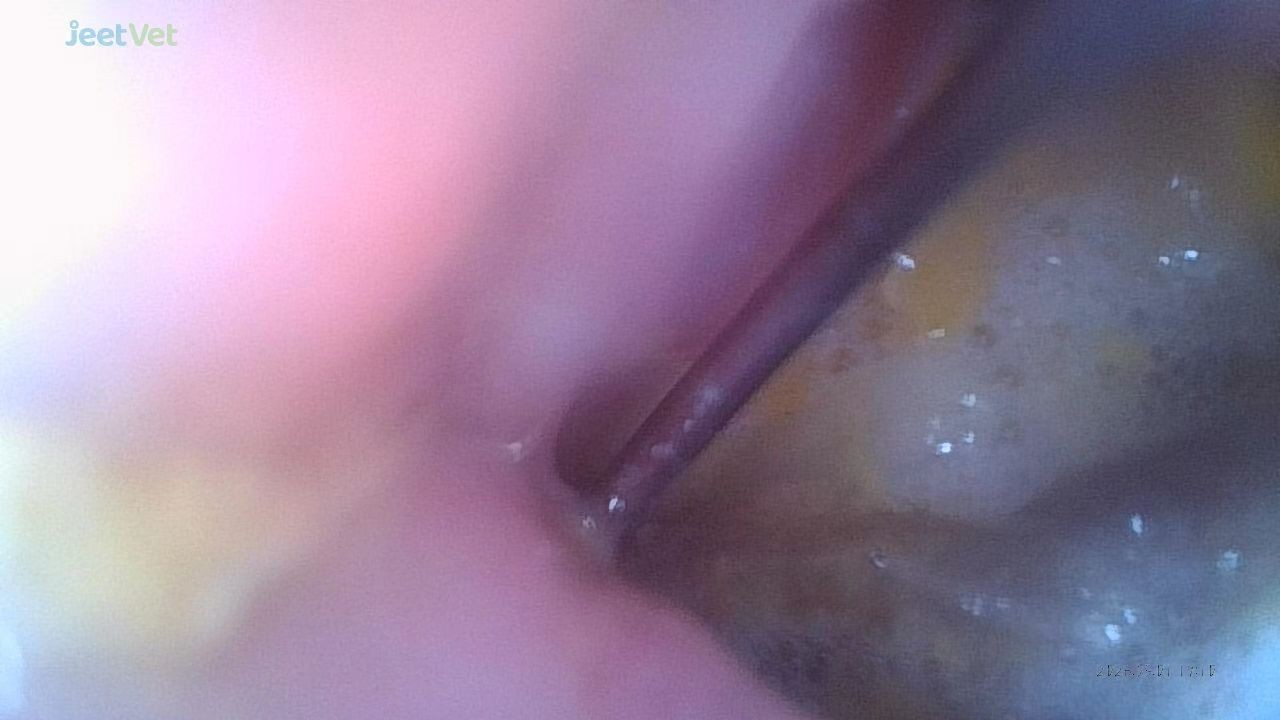
Figure 4: Fishhook Removal
The foreign body was carefully grasped and safely removed.
Why Endoscopy Was Critical
1. Minimally Invasive
Endoscopy avoided abdominal surgery and significantly reduced tissue trauma.
2. Precise Visualization
Direct visualization enabled accurate localization of the fishhook before removal.
3. Reduced Risk of Injury
Controlled extraction minimized the risk of perforation and bleeding.
4. Faster Recovery
Compared with surgery, the dog experienced a much faster recovery process.
Portable Veterinary Endoscope vs Traditional Endoscope
| Parameter | JeetVet RAE-105 | Traditional Endoscope |
|---|---|---|
| Outer Diameter | 5.8 mm | 6–10 mm |
| Instrument Channel | 2.0 mm | 2.0 mm or 2.4 mm |
| Working Length | 1000 mm | 1000 mm |
| Image Quality | 720P | 720P |
| Field of View | 120° | 120° |
| Articulation | 360° continuous rotation | 4-direction control |
| Connectivity | Supports phone and computer | Dedicated processor required |
| Learning Curve | Easy to use (~5 minutes) | Long training required |
| ROI | Fast return on investment | Typically 2–3 years |
Clinical Value of Veterinary Endoscopy
Compared with traditional surgery, veterinary endoscopy offers:
- ▪️Reduced patient trauma
- ▪️Lower complication risk
- ▪️Faster recovery
- ▪️Improved clinical efficiency
▪️Portable veterinary endoscope systems also provide:
- ▪️Easy adoption for clinics
- ▪️▪️Multi-functional clinical applications
- ▪️Better cost-performance ratio
Conclusion
Fishhook ingestion can quickly become a life-threatening emergency in dogs.
With modern veterinary endoscopy, dangerous gastric foreign bodies can often be removed safely and minimally invasively, avoiding surgery while dramatically improving patient recovery and clinical outcomes.