How a Portable Veterinary Endoscope Supports Digestive Tract Evaluation in Dogs
- Share
- Issue Time
- Feb 4,2026
Summary
Gastrointestinal disorders are among the most common challenges in small animal practice.
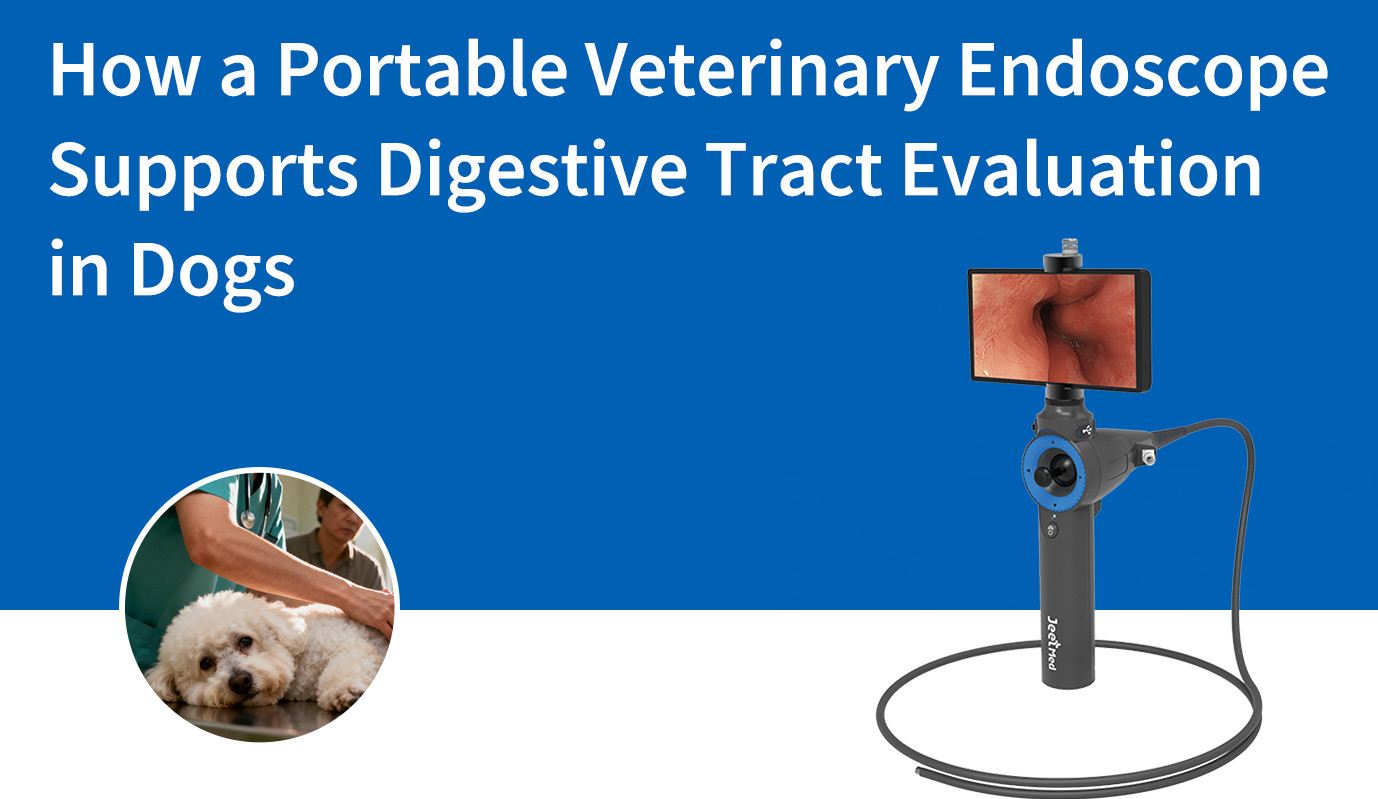
Gastrointestinal disorders are among the most common challenges in small animal practice. This case-based article explores how a Veterinary Endoscope played a key role in diagnosing a canine gastric foreign body while improving clinical efficiency and decision-making.
Case Background
A 4-year-old male Bichon Frise was presented to a local veterinary clinic with intermittent vomiting, reduced appetite, and signs of discomfort after eating. Routine physical examination revealed no obvious abnormalities.
Based on the clinical history, the veterinarian suspected a possible gastric foreign body or localized gastric irritation. To confirm the diagnosis without immediately resorting to surgery, an endoscopic examination was considered.
Clinical Challenge in Digestive Tract Cases
Digestive system cases often present diagnostic uncertainty in daily practice:
- ▪️Soft foreign bodies may not be clearly visible on radiographs
- ▪️Ultrasound results can be operator-dependent
- ▪️Exploratory surgery increases cost and recovery time
- ▪️Traditional endoscopy systems may be too large or complex for smaller clinics
The clinic required a diagnostic tool that was both minimally invasive and practical for routine use.
How a Portable Veterinary Endoscope Helped
A Portable Veterinary Endoscope was used to perform gastric visualization. The compact design allowed for quick setup and smooth integration into the clinic’s workflow.
Key Equipment Advantages
- ▪️Portable structure suitable for daily clinical use
- ▪️High-resolution imaging for clear gastric mucosa visualization
- ▪️Appropriate insertion diameter and length for small animals
- ▪️USB or WiFi connection for real-time display and image capture
During the examination, a soft rubber-like foreign object was identified in the gastric antrum, along with mild localized inflammation and no signs of perforation.
Outcome and Practical Value
With direct visual confirmation provided by the veterinary endoscope, the veterinarian was able to:
- ▪️Confirm the cause of clinical symptoms efficiently
- ▪️Avoid unnecessary exploratory surgery
- ▪️Communicate findings clearly to the pet owner using visual evidence
From an operational perspective, this case demonstrated how veterinary endoscopy equipment enhances diagnostic confidence and supports informed clinical decisions.
Why Veterinary Endoscopy Equipment Matters
Digestive tract disorders are frequently encountered in companion animals. Integrating a Veterinary Endoscope into daily practice enables clinics to:
- ▪️Expand in-house diagnostic capabilities
- ▪️Improve workflow efficiency
- ▪️Reduce dependence on invasive procedures
- ▪️Upgrade diagnostic tools without major infrastructure investment
For veterinary teams seeking a practical and flexible solution, portable veterinary endoscopy equipment offers a reliable approach to modern diagnostics.