Sudden Sneezing in Dogs: How Veterinary Endoscopy Helped Remove a Nasal Foreign Body
- Share
- Issue Time
- Mar 11,2026
Summary
A real veterinary case showing how a veterinary endoscope helped diagnose and remove a nasal foreign body in a dog.
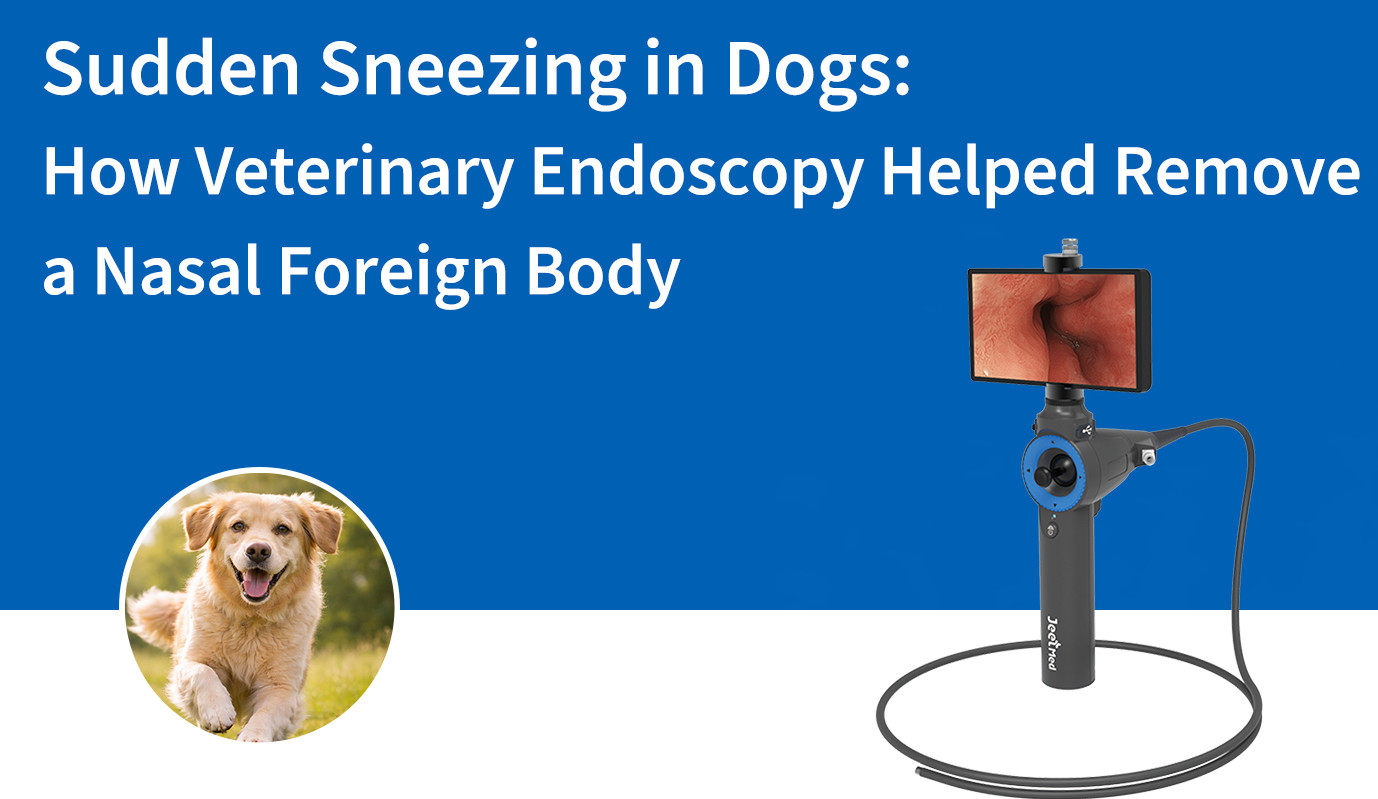
Persistent sneezing and nasal discharge in dogs may appear to be minor respiratory problems, but in some cases the underlying cause can be more serious. This case study shows how a veterinary endoscope helped diagnose and remove a hidden nasal foreign body, allowing the dog to recover quickly without invasive surgery.
A Dog with Continuous Sneezing
A 3-year-old Golden Retriever was brought to a veterinary clinic after several days of continuous sneezing. The owner also noticed occasional nasal discharge mixed with small traces of blood.
Other symptoms included:
- ▪️Frequent sneezing
- ▪️Nasal discharge
- ▪️Occasional nose bleeding
- ▪️Pawing at the nose
Initially, these signs were suspected to be caused by seasonal allergies or a mild infection. However, as the symptoms persisted, the veterinarian recommended further diagnostic evaluation.
Why Advanced Diagnostic Tools Were Needed
External examination of the nasal cavity did not reveal any visible obstruction. Although imaging tests suggested irritation within the nasal passage, the exact cause could not be confirmed.
Because the nasal cavity is narrow and difficult to visualize using conventional methods, the veterinarian decided to perform a veterinary nasal endoscopy to obtain a direct view of the nasal passages.
Endoscopy Revealed a Hidden Foreign Body
Using a flexible veterinary endoscope, the veterinarian carefully examined the dog's nasal cavity. The endoscopic image clearly revealed a small grass awn lodged deep inside the nasal passage.
Grass awns are common foreign bodies in dogs that spend time outdoors, and they can easily become trapped in the nasal cavity.
The endoscope allowed the veterinarian to:
- ▪️Locate the exact position of the foreign object
- ▪️Assess irritation and inflammation in the nasal mucosa
- ▪️Confirm that no additional debris was present
Minimally Invasive Removal
Once the foreign body was identified, the veterinary team inserted retrieval forceps through the working channel of the veterinary endoscope.
The grass awn was carefully grasped and removed under direct visualization, ensuring minimal damage to surrounding tissue.
Compared with surgical intervention, endoscopic foreign body removal offers several benefits:
- ▪️No surgical incision
- ▪️Greater precision during removal
- ▪️Reduced recovery time
- ▪️Lower risk of complications
After the procedure, the dog's sneezing stopped almost immediately, and the nasal irritation resolved within a few days.
The Role of Portable Veterinary Endoscopy
Cases like this demonstrate the importance of modern veterinary endoscopy systems in small animal practice. Endoscopic technology allows veterinarians to examine areas that are otherwise difficult to access, such as the nasal cavity, respiratory tract, and gastrointestinal system.
Portable systems developed by JeetVet provide veterinary clinics with flexible diagnostic capabilities while maintaining high imaging quality.
Modern portable veterinary endoscopes typically provide:
- ▪️High-definition imaging
- ▪️Flexible insertion tubes for delicate anatomy
- ▪️Working channels for biopsy and foreign body removal
- ▪️Portable designs suitable for veterinary clinics
Improving Veterinary Diagnosis with Endoscopy
As veterinary medicine continues to advance, veterinary endoscopic equipment is becoming an essential tool for modern animal hospitals.
From gastrointestinal examinations to nasal and respiratory diagnostics, endoscopy enables veterinarians to perform accurate diagnosis and minimally invasive treatments that significantly improve patient outcomes.