Urogenital Endoscopy in Veterinary Medicine | Veterinary Endoscope Applications
- Share
- Issue Time
- Jan 7,2026
Summary
Disorders of the urinary and reproductive systems are frequently encountered in small animal practice.
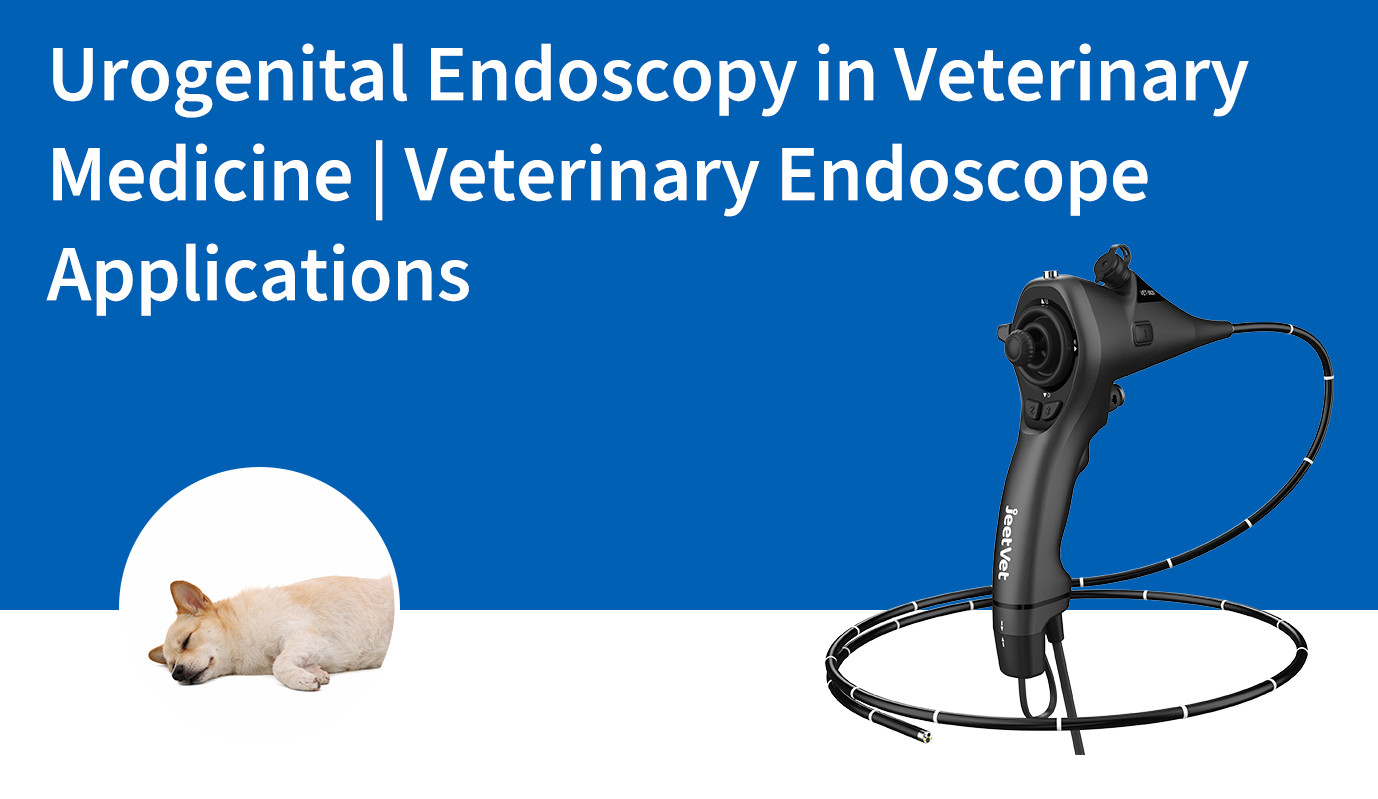
Disorders of the urinary and reproductive systems are frequently encountered in small animal practice. Clinical signs such as hematuria, dysuria, urinary obstruction, and abnormal reproductive discharge can be difficult to diagnose accurately using imaging alone. Urogenital Endoscopy, performed with a Veterinary Endoscope, provides direct visualization of the urinary and reproductive tract, allowing for precise diagnosis and targeted intervention.
What Is Urogenital Endoscopy?
Urogenital endoscopy refers to the endoscopic examination of the lower urinary tract and selected reproductive structures. Using a slim, flexible or semi-rigid Veterinary Endoscope, clinicians can evaluate internal anatomy that is otherwise difficult to assess non-invasively.
Common Urogenital Endoscopic Procedures
- ▪️Cystoscopy – visualization of the bladder and urethra
- ▪️Urethroscopy – evaluation of urethral abnormalities
- ▪️Vaginoscopy – examination of the vaginal canal
- ▪️Endoscopic-guided biopsy and sampling
- ▪️Removal of small uroliths or foreign material
When Is Urogenital Endoscopy Indicated?
Urinary Tract Indications
- ▪️Hematuria of unknown origin
- ▪️Recurrent urinary tract infections
- ▪️Dysuria or stranguria
- ▪️Suspected bladder stones or urethral obstruction
- ▪️Congenital urinary tract abnormalities
Reproductive Tract Indications
- ▪️Abnormal vaginal discharge
- ▪️Suspected vaginal strictures or masses
- ▪️Assessment of reproductive tract anatomy
- ▪️Evaluation related to breeding management
Clinical Advantages of Urogenital Endoscopy
Compared with imaging alone, urogenital endoscopy offers several key clinical advantages:
- ▪️Direct visualization of bladder and urethral mucosa
- ▪️Accurate detection of inflammation, polyps, masses, and calculi
- ▪️Targeted biopsy under direct endoscopic guidance
- ▪️Reduced need for exploratory surgery
- ▪️Minimally invasive approach with faster recovery
The Role of Portable Veterinary Endoscopes
Advances in portable endoscopy have expanded access to urogenital diagnostics. Compact and lightweight systems allow veterinarians to perform cystoscopy and vaginoscopy without large, fixed endoscopy towers.
Portable Veterinary Endoscope solutions—such as those developed by JeetVet— are well suited for urogenital procedures due to their slim probe diameters, high-definition imaging, and ease of integration into daily clinical workflows.
Best Practices for Urogenital Endoscopy
- ▪️Adequate sedation or general anesthesia for patient safety
- ▪️Proper bladder distension to improve visualization
- ▪️Selection of appropriate scope length and diameter
- ▪️Gentle manipulation to minimize mucosal trauma
- ▪️Thorough documentation of endoscopic findings
Conclusion
Urogenital Endoscopy is an essential component of modern veterinary diagnostics. By incorporating endoscopic techniques with a Veterinary Endoscope, veterinarians can achieve earlier diagnosis, reduce invasiveness, and deliver higher-quality care for urinary and reproductive disorders in small animals.