Veterinary Endoscope Case Study: Safe Removal of a Swallowed Feeding Tube in a Parrot
- Share
- Issue Time
- Jul 1,2026
Summary
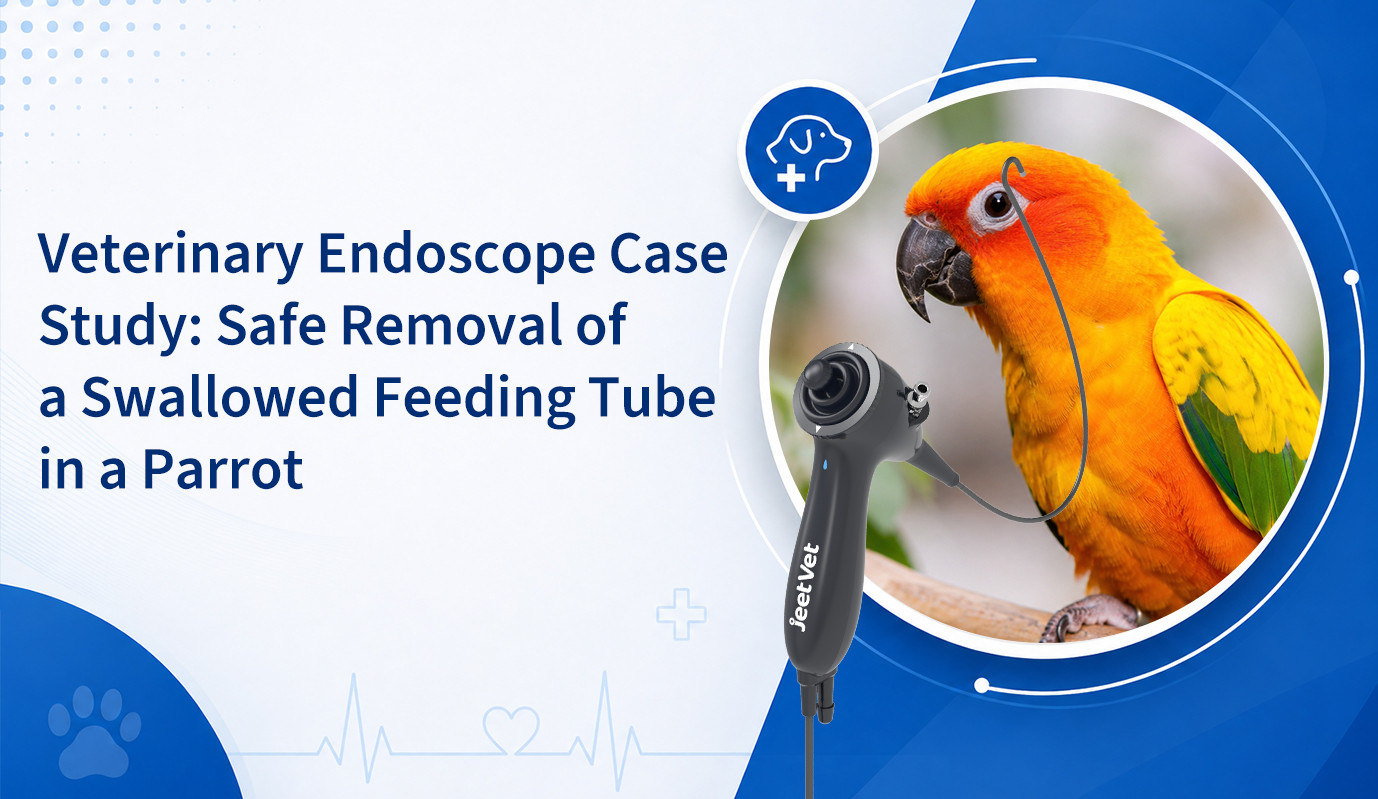
Foreign body ingestion is not limited to dogs and cats. In exotic pet medicine, birds are naturally curious and frequently investigate their surroundings with their beaks, making accidental ingestion a common emergency.
Foreign body ingestion is not limited to dogs and cats. In exotic pet medicine, birds are naturally curious and frequently investigate their surroundings with their beaks, making accidental ingestion a common emergency.
This case demonstrates how a veterinary endoscope helped veterinarians accurately diagnose and safely remove a swallowed rubber feeding tube from a parrot, avoiding invasive surgery and ensuring a rapid recovery.
Case Background
- Species: Parrot
- Gender: Unknown
- Chief Complaint: Repeated vomiting, anorexia, lethargy
The owner had recently been hand-feeding another sick bird and accidentally left a rubber feeding tube on a nearby table. Shortly afterward, the tube disappeared.
Initially, the owner assumed the tube had simply fallen onto the floor. However, the following day, the parrot developed repeated vomiting, refused food and water, and became noticeably lethargic.
The bird was immediately brought to the veterinary clinic for further examination.
Diagnostic Challenges
Diagnosing gastrointestinal foreign bodies in birds can be particularly challenging because:
- Birds often conceal clinical signs until disease becomes severe.
- Many foreign materials, such as rubber or plastic, are poorly visible on radiographs.
- The avian digestive tract is narrow and delicate.
- Blind retrieval may cause serious injury.
Physical examination revealed:
- Empty crop
- Mild abdominal discomfort
- Signs of dehydration
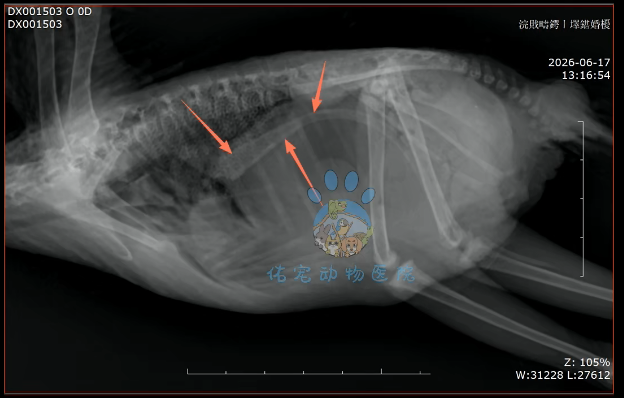
Radiographic examination identified a faint low-density shadow near the distal esophagus and proventriculus. However, the complete shape and degree of impaction could not be determined.
Further investigation using a veterinary endoscope was recommended.
Veterinary Endoscope Examination
Veterinarians performed endoscopic examination using the JeetVet RAE-201 flexible veterinary endoscope.
The veterinary endoscope immediately provided clear visualization beyond the limitations of conventional imaging.
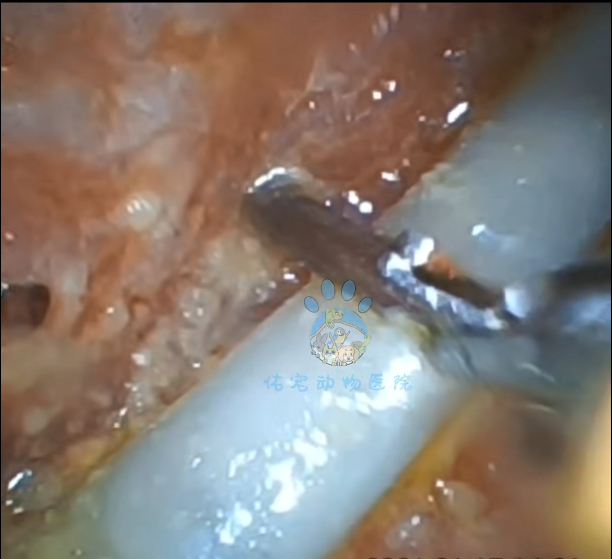
- Esophageal mucosa showed congestion and superficial abrasions.
- A curled rubber feeding tube was identified within the esophagus.
- The distal portion of the foreign body was lodged at the entrance of the proventriculus.
- Surrounding tissues exhibited edema but no perforation was detected.
Thanks to the high-definition imaging provided by the veterinary endoscope, clinicians confirmed that endoscopic retrieval could be safely performed without surgical intervention.
Endoscopic Foreign Body Removal
Under real-time visualization provided by the JeetVet RAE-201 veterinary endoscope, the clinician advanced retrieval forceps through the working channel and carefully grasped the foreign body.
The feeding tube was extracted slowly and steadily through the oral cavity while synchronizing with the bird's respiratory movements.
- Total procedure time: approximately 15 minutes
- No perforation observed
- No foreign body remnants remained
- No surgical incision required
The procedure was completed successfully with minimal patient trauma.
Why the Veterinary Endoscope Was Critical
1. Visualization of Radiolucent Foreign Bodies
Materials such as rubber and plastic are often difficult to detect on X-rays. The veterinary endoscope provided direct visualization of the foreign body, eliminating diagnostic uncertainty.
2. Flexible Design for Exotic Pets
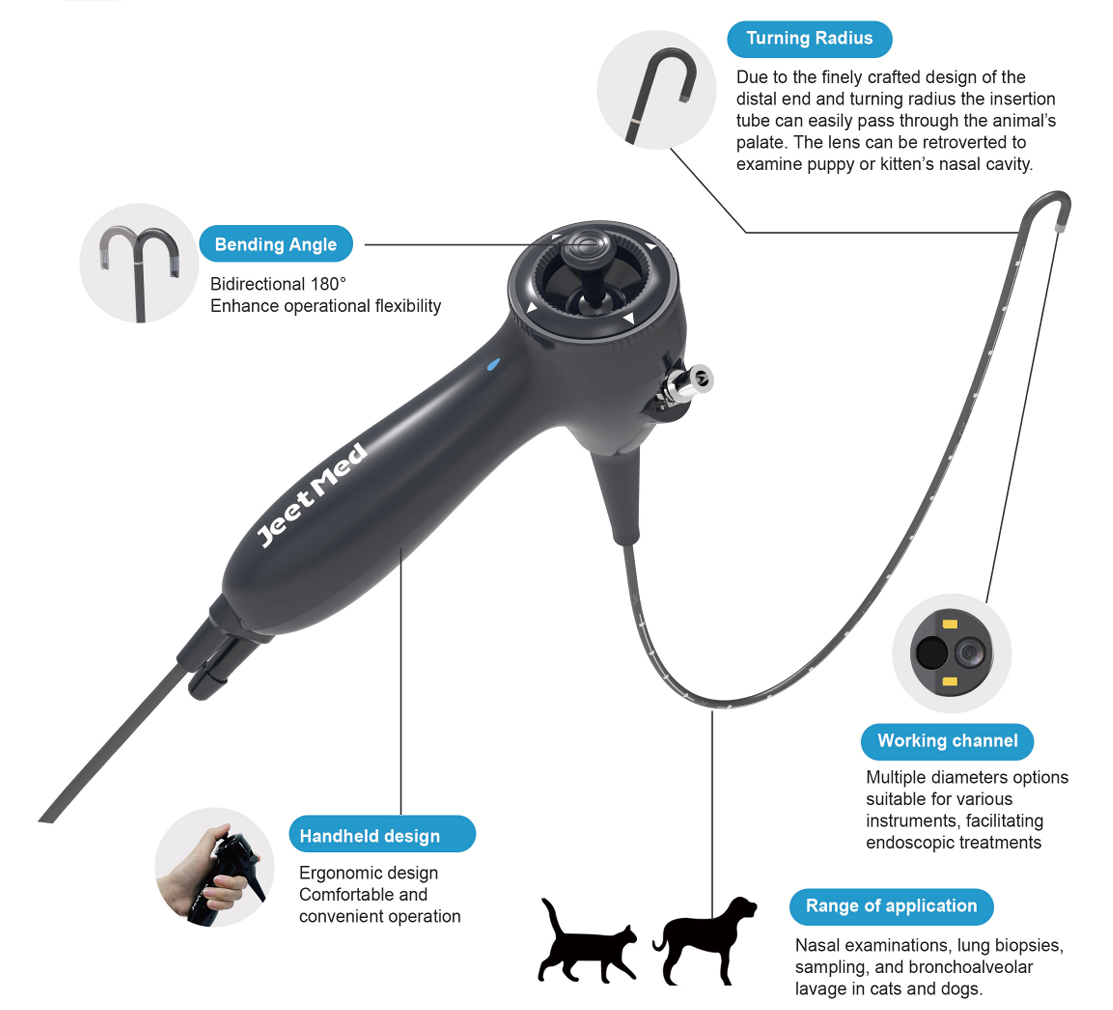
The slim and flexible insertion tube of the JeetVet RAE-201 adapted well to the narrow and delicate anatomy of the parrot's esophagus, reducing the risk of mechanical injury.
3. Precise Instrument Control
The working channel supported retrieval instruments, allowing veterinarians to adjust gripping force and extraction angles under direct visualization.
Postoperative Outcome
- Rapid recovery following the procedure
- Improved appetite within 48 hours
- Return of normal vocalization and activity
- No complications observed during follow-up
The parrot recovered quickly and resumed normal behavior shortly after treatment.
Clinical Value of Veterinary Endoscopy in Exotic Pets
Veterinary endoscopy is becoming increasingly important in exotic animal medicine because it offers:
- Minimally invasive diagnosis and treatment
- Reduced patient trauma
- Improved diagnostic accuracy
- Rapid recovery
- Safer foreign body retrieval
For avian and exotic animal practitioners, a portable veterinary endoscope provides significant advantages when managing delicate patients.
Conclusion
Accidental foreign body ingestion can rapidly become life-threatening in birds. Early diagnosis and minimally invasive intervention are essential for successful outcomes.
This case highlights how a veterinary endoscope enabled accurate diagnosis and safe removal of a swallowed feeding tube in a parrot, avoiding surgery while dramatically improving patient recovery.
Modern systems such as the JeetVet RAE-201 veterinary endoscope are helping veterinarians deliver safer, faster, and more effective care for exotic animal patients.