When Digestive Symptoms Persist: The Role of Endoscopy in Veterinary Diagnosis
- Share
- Issue Time
- Jan 16,2026
Summary
Vomiting, chronic diarrhea, weight loss, and poor appetite are among the most common clinical complaints in small animal practice.
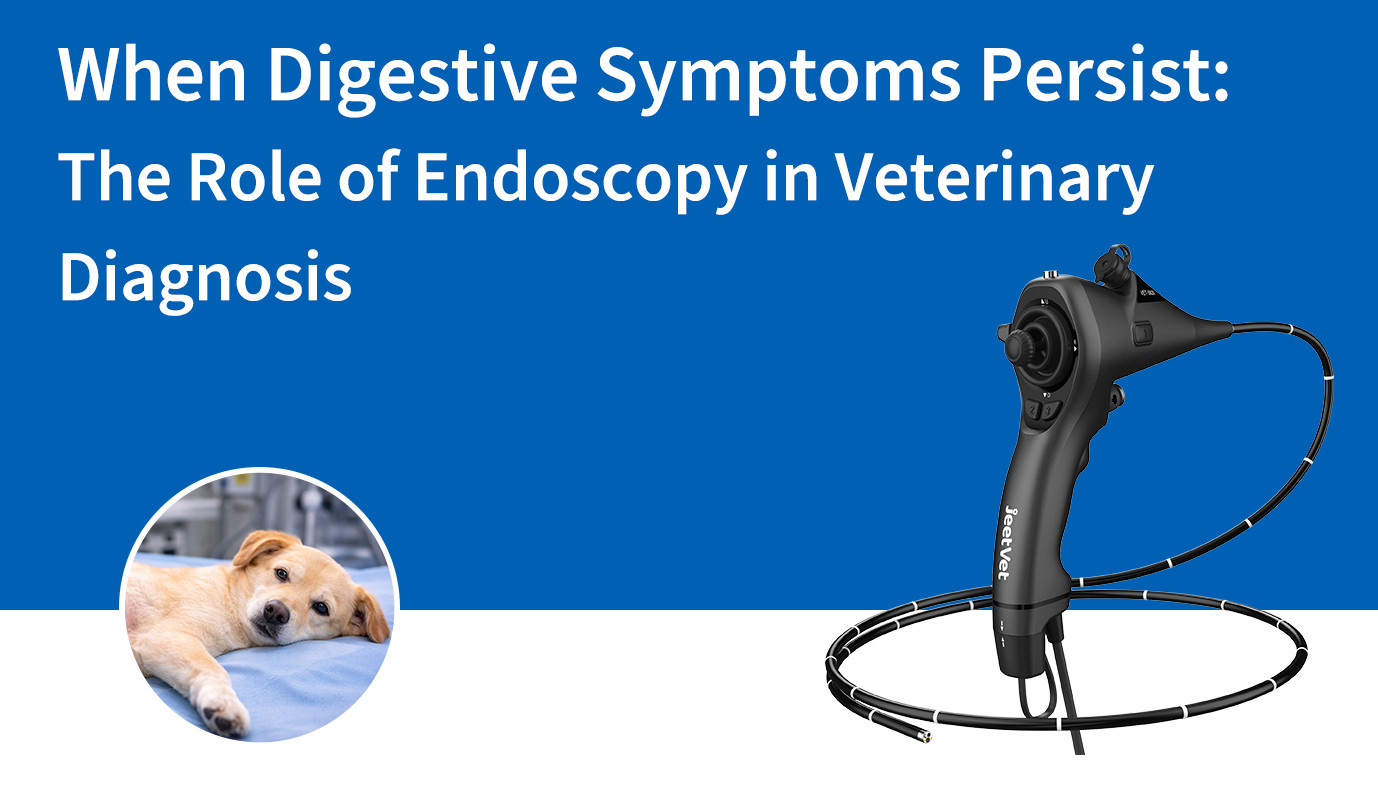
Vomiting, chronic diarrhea, weight loss, and poor appetite are among the most common clinical complaints in small animal practice. Initial management often includes dietary trials, fecal testing, imaging, and medical therapy. However, when gastrointestinal signs persist or recur, veterinarians face a critical diagnostic question: what is happening inside the digestive tract?
At this stage, Digestive Endoscopy performed with a Veterinary Endoscope becomes an essential diagnostic tool.
Why External Tests Are Sometimes Not Enough
Blood work, imaging, and fecal analysis provide valuable information, but they cannot always reveal mucosal-level changes within the gastrointestinal tract.
- ▪️Chronic inflammation of the stomach or intestines
- ▪️Ulcers, erosions, or abnormal mucosal patterns
- ▪️Partially obstructive foreign bodies
- ▪️Conditions requiring histopathological biopsy
Without direct visualization, treatment decisions may rely heavily on assumptions rather than confirmed pathology.
Gastroscopy: Seeing the Digestive Tract Directly
Gastroscopy is a core application of Small Animal Endoscopy, allowing real-time visualization of the esophagus, stomach, and proximal duodenum.
Using a high-quality Veterinary Endoscope, veterinarians can:
- ▪️Evaluate mucosal color, texture, and integrity
- ▪️Identify ulcers, erosions, masses, or foreign material
- ▪️Perform targeted biopsies under direct visualization
- ▪️Document findings with images or video
Minimally Invasive and Clinically Efficient
Compared with exploratory surgery, digestive endoscopy offers a minimally invasive approach with faster recovery and reduced procedural risk.
- ▪️Lower surgical trauma
- ▪️Shorter anesthesia time
- ▪️Suitable for small or fragile patients
- ▪️Repeatable for follow-up evaluation
The Practical Value of Portable Veterinary Endoscopes
Advances in Portable Veterinary Endoscope systems have made digestive endoscopy more accessible in everyday veterinary practice.
Compact designs allow clinics to integrate gastroscopy into routine diagnostic workflows without the need for complex endoscopy towers. Manufacturers such as JeetVet focus on portable endoscopic solutions tailored to gastrointestinal examinations across different animal sizes.
Supporting Long-Term Gastrointestinal Management
Chronic digestive diseases often require ongoing monitoring rather than a single diagnostic procedure. Endoscopic evaluation allows veterinarians to assess treatment response, adjust therapy plans, and communicate findings clearly with pet owners.
Conclusion
Digestive symptoms may appear similar clinically, but their underlying causes can differ significantly. Gastroscopy using a Veterinary Endoscope enables veterinarians to move beyond symptom management toward precise gastrointestinal diagnosis.
In modern small animal practice, digestive endoscopy is not an advanced luxury, but a logical and effective step in comprehensive gastrointestinal care.