When a Dog Can’t Swallow: How Veterinary Endoscopy Helped Remove an Esophageal Foreign Body
- Share
- Issue Time
- Mar 13,2026
Summary
A real veterinary case showing how a veterinary endoscope helped diagnose and remove an esophageal foreign body in a dog.
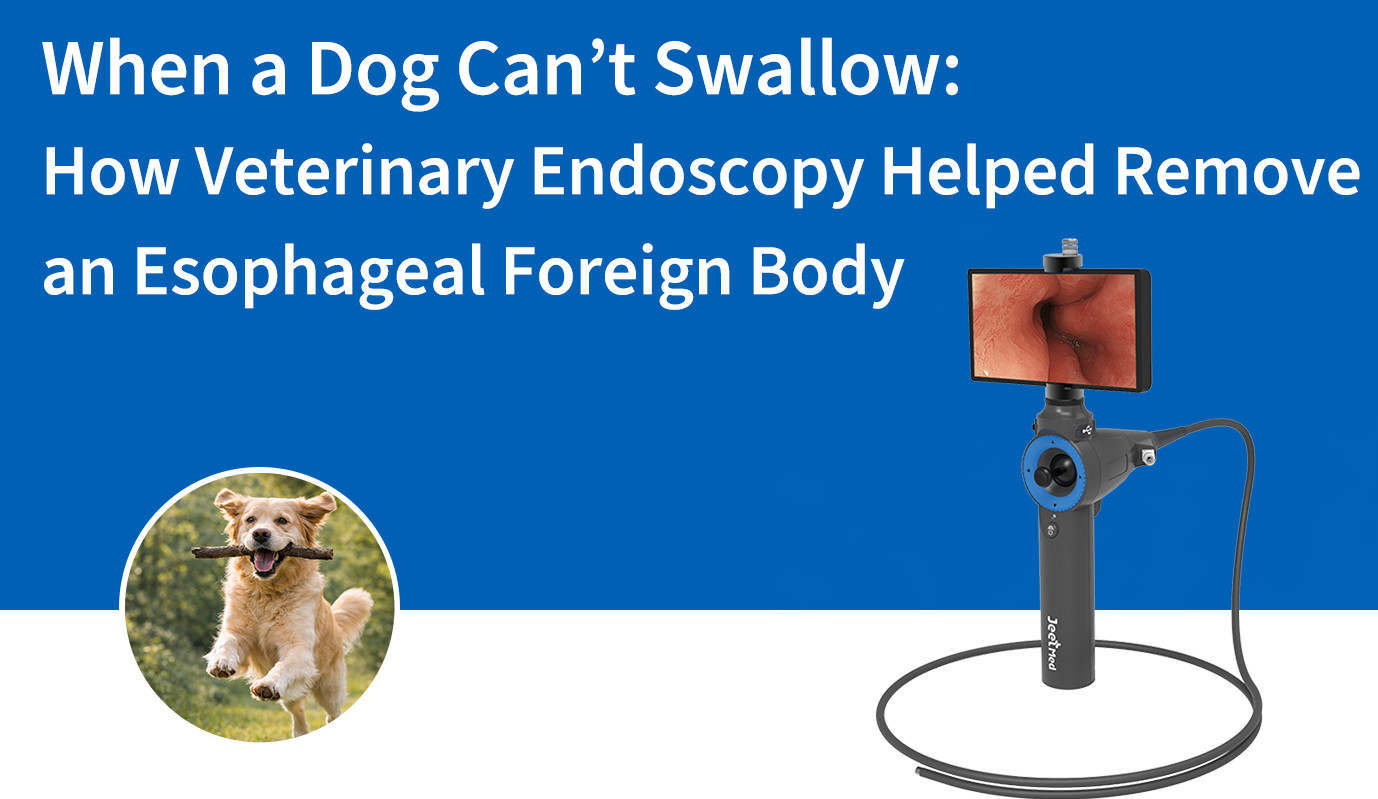
Foreign body ingestion is a common emergency in small animal veterinary practice. This case study demonstrates how a veterinary endoscope helped diagnose and safely remove an esophageal obstruction, allowing the patient to recover quickly without invasive surgery.
Sudden Vomiting After Eating
A 5-year-old Labrador Retriever was brought to a veterinary clinic after repeated episodes of vomiting shortly after meals. The dog appeared eager to eat but was unable to keep food down.
The owner also reported several unusual symptoms:
- ▪️Frequent regurgitation after eating
- ▪️Excessive drooling
- ▪️Difficulty swallowing
- ▪️Restlessness after meals
Because these symptoms developed suddenly, the veterinarian suspected the possibility of an esophageal foreign body.
Further Examination Was Required
During the physical examination, the dog showed mild discomfort around the neck and chest region. Initial imaging suggested that something might be lodged in the esophagus, but the exact object could not be clearly identified.
In cases like this, direct visualization is often the most reliable method. The veterinary team therefore decided to perform an examination using a flexible veterinary endoscope.
Endoscopic Examination Revealed the Cause
Using the veterinary endoscope, the veterinarian carefully examined the dog’s esophagus. The endoscopic image clearly revealed a small bone fragment lodged inside the esophagus.
Bone fragments are a common cause of esophageal obstruction in dogs, especially when pets chew on hard treats or leftover bones.
The endoscope allowed the veterinarian to:
- ▪️Locate the exact position of the foreign body
- ▪️Assess irritation and swelling of the esophageal tissue
- ▪️Plan the safest method for removal
Minimally Invasive Removal
Once the obstruction was identified, specialized grasping forceps were inserted through the working channel of the veterinary endoscope.
Under direct visualization, the bone fragment was carefully removed without damaging surrounding tissue.
Compared with traditional surgery, endoscopic foreign body removal offers several advantages:
- ▪️No surgical incision
- ▪️Greater procedural precision
- ▪️Reduced recovery time
- ▪️Lower complication risk
After the procedure, the dog recovered quickly and was able to drink water normally within a few hours.
The Importance of Veterinary Endoscopy Equipment
Foreign body ingestion cases highlight the importance of modern veterinary endoscopy equipment. Endoscopic technology allows veterinarians to visualize internal structures directly and perform minimally invasive procedures.
Portable systems developed by JeetVet allow veterinary clinics to perform high-quality endoscopic examinations while maintaining flexibility in everyday clinical workflows.
Modern portable veterinary endoscopes typically provide:
- ▪️High-definition imaging
- ▪️Flexible insertion tubes for small animal anatomy
- ▪️Working channels for foreign body retrieval
- ▪️Compact designs suitable for veterinary clinics
Advancing Veterinary Care with Endoscopy
As veterinary medicine continues to advance, veterinary endoscopic systems are becoming essential tools in modern animal hospitals.
From gastrointestinal examinations to respiratory diagnostics, endoscopy enables veterinarians to perform accurate diagnoses and minimally invasive treatments that significantly improve patient care.